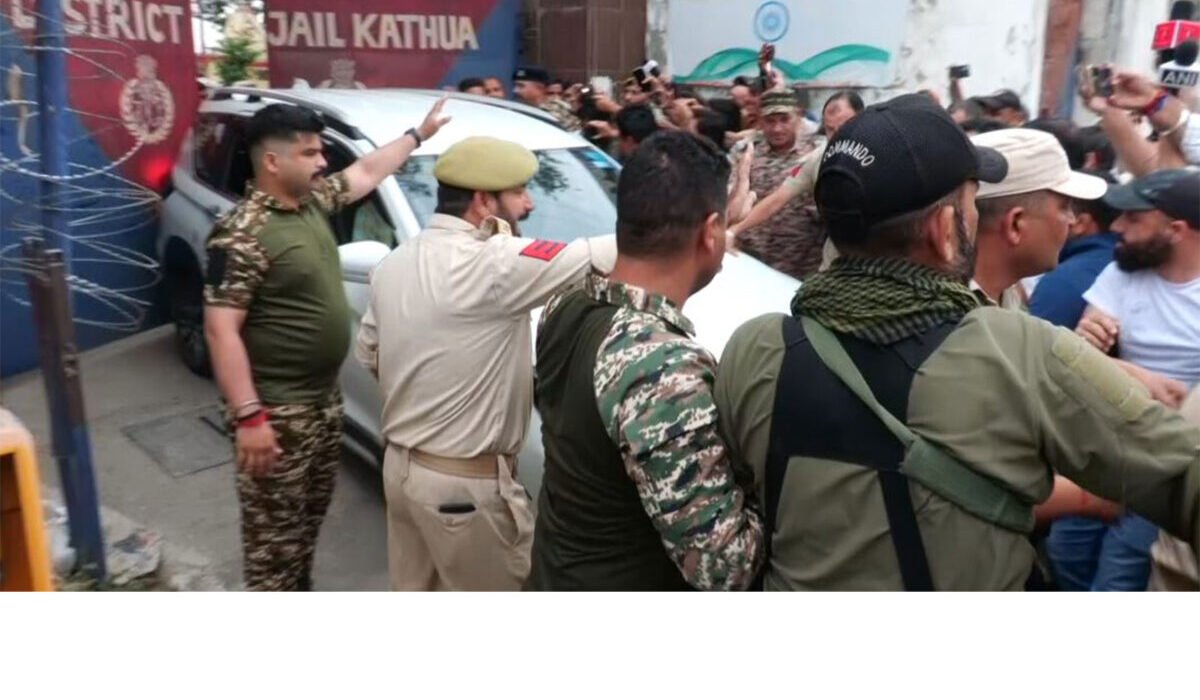
JAMMU, Apr 28: Aam Aadmi Party (AAP) legislator Mehraj Malik was released from Kathua jail on Tuesday after the Jammu and Kashmir High Court quashed his detention under the Public Safety Act (PSA).
Following his release, Malik said he would continue to raise public issues and remain active in highlighting the concerns of people.
The High Court had set aside the detention order issued by the Doda District Magistrate on September 8 last year and directed authorities to “release the petitioner-detenu forthwith from preventive detention.”
Justice Mohd Yousuf Wani, in his order, observed that the detention was legally unsustainable and suffered from “non-application of mind.”
“Malik was released by jail authorities this morning after completing all formalities,” his lawyer and AAP spokesperson Appu Singh Slathia said.
As Malik walked out of Kathua jail, a large number of supporters gathered outside, raising slogans in his favour, dancing to dhol beats, and showering him with flowers.
Speaking to reporters after his release, Malik said, “I am now out of jail. I thank the judiciary for justice. I will continue to raise the issues of the people.”
The Jammu and Kashmir and Ladakh High Court had on Monday quashed Malik’s preventive detention under PSA, terming it legally unsustainable and based on “non-application of mind.”
Malik, who heads the AAP’s Jammu and Kashmir unit, was detained in September last year on allegations of disturbing public order and was lodged in Kathua jail.
He later filed a habeas corpus petition in the High Court challenging his detention and also sought Rs 5 crore as compensation.
The High Court had reserved its verdict on February 23 and delivered the final order on Monday.
In its 87-page judgment, the court ordered the immediate release of the MLA, stating that the detention order could not be justified under preventive detention laws.
The court also emphasized the difference between “law and order” and “public order,” noting that the cases against Malik did not meet the threshold for preventive detention.
It observed that the allegations mostly related to routine law and order matters, including election-related issues, and did not amount to public disorder.
“There was no live link or proximity between the alleged activities and the need for preventive detention,” the court said, adding that PSA provisions were wrongly invoked. (Agencies)