
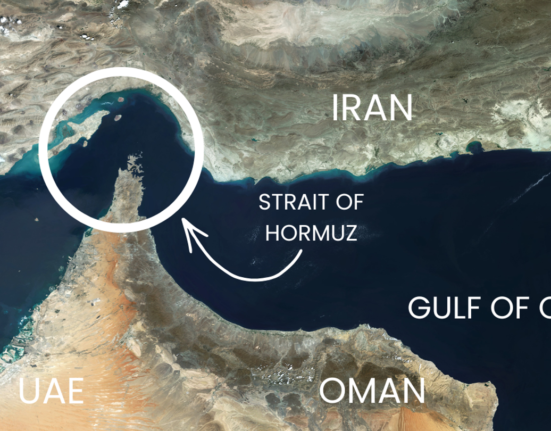
ISLAMABAD, Apr 13: President Donald Trump on Sunday said the U.S. Navy would begin a swift blockade of ships entering or leaving the strategic Strait of Hormuz after U.S.-Iran ceasefire talks held in Pakistan reportedly ended without an agreement.
U.S. Central Command (CENTCOM) announced that the blockade would include Iranian ports starting Monday at 10 a.m. EDT (5:30 p.m. in Iran), and would be “enforced impartially against vessels of all nations.”
However, CENTCOM clarified that ships travelling between non-Iranian ports would still be allowed to pass through the strait. The move marked a scaled-down version of Trump’s earlier threat to block the entire waterway, ensuring limited commercial movement continues through the critical route.
Trump said the move aims to weaken Iran’s leverage, noting that the strait handled nearly 20% of global oil shipments before the conflict began.
Despite restrictions in recent days, marine tracking data suggests over 40 commercial vessels have crossed since the ceasefire period began. Analysts warn the situation could further disrupt global energy markets.
Following the announcement, oil prices surged in early trading on Sunday. U.S. crude rose 8% to $104.24 per barrel, while Brent crude climbed 7% to $102.29. Brent had been priced near $70 per barrel before the escalation in late February.
Iran’s Revolutionary Guard said the Strait of Hormuz remains under Tehran’s “full control” and is open to non-military vessels, warning military ships would face a “forceful response,” according to semi-official Iranian media reports.
During the talks in Pakistan, the U.S. military said two destroyers had already passed through the strait ahead of mine-clearing operations, though Iran denied the claim.
Security experts have questioned the feasibility of Trump’s plan. Andreas Krieg, a senior lecturer in security studies at King’s College London, said there is limited military leverage available. “There isn’t any tool in the toolbox in terms of the military lever that he could use to get his way,” he said.
Trump said Iran’s nuclear programme was central to the breakdown of talks and, in remarks to Fox News, again warned of possible strikes on civilian infrastructure.
Iranian Parliament Speaker Mohammad Bagher Qalibaf, who led Tehran’s delegation, responded sharply upon returning to Iran, saying: “If you fight, we will fight.” (Agency)


Leave feedback about this